
West Indies spinner Akeal Hosein acknowledges India as a "very dangerous" side ahead of the upcoming five-match T20I series. He discusses the challenges of bowling in the powerplay against India's strong batting lineup and emphasizes the importance of planning, execution, and sticking to effective strategies, aided by data. Hosein asserts that the West Indies team is ready for the challenge and will not back down.
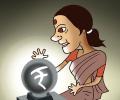
The National Payments Corporation of India (NPCI) has deferred the implementation of a 0.4 per cent Merchant Discount Rate (MDR) on Person-to-Merchant UPI transactions above Rs 2,000. Originally set for October 15, the new date will be announced after Diwali, providing relief to users and merchants, especially during the festive season. The decision came amidst opposition concerns about the levy burdening consumers.

Leading private banks in India, including HDFC Bank, ICICI Bank, and Axis Bank, experienced a decline in net interest margins (NIMs) during the second quarter of the financial year due to significant deposit mobilisation under the Foreign Currency Non-Resident (Bank), or FCNR (B), scheme. However, banks anticipate a recovery in margins in the coming quarters as these funds are deployed and the interest-rate cycle supports lending yields.

HCLTech, India's third-largest IT services company, reported robust Q2 revenue growth of 2.3 per cent in constant currency, driven by services and ER&D segments, with strong new deal wins of $3.3 billion and significant traction in its AI business. Despite exceeding margin estimates and raising revenue guidance, some brokerages remain cautious due to the stock's premium valuation compared to peers.

Luxury car buyers in India are spending lakhs -- and sometimes crores -- to make their cars truly their own, turning personalisation into a growing business opportunity for automakers.

The National Payments Corporation of India (NPCI) has deferred the implementation of a 0.4 per cent Merchant Discount Rate (MDR) on Person-to-Merchant (P2M) UPI payments above Rs 2,000, originally set for October 15, until after Diwali.

India's vice-captain Tilak Varma emphasised the need for an aggressive, wicket-taking approach against the West Indies' powerful batting lineup in the upcoming fourth T20I. With India leading 2-1, Varma highlighted the visitors' deep hitting prowess and the team's adjusted strategy after a defensive lapse in the second match. He also discussed his adaptable batting role and the team's approach to the re-laid pitch in Hyderabad.

Indian left-arm pacer Arshdeep Singh has claimed the record for most wickets by an Indian bowler in T20 Internationals in a calendar year, surpassing Bhuvneshwar Kumar's previous best.

Reserve Bank of India (RBI) Governor Sanjay Malhotra stated that surplus liquidity in the banking system is expected to drain within the current financial year, utilising tools like currency leakage, sell-buy swaps, open market operations (OMOs), and variable rate operations.

Young Indian fast bowlers Gurjapneet Singh, Arshad Khan, and Yash Thakur are set to feature in the India A vs Australia A one-day series, aiming to showcase their talent and address the senior national team's current scarcity in the pace department. The series, initially anticipated for Hardik Pandya's return, now serves as a crucial platform for these emerging pacers to catch the attention of national selectors amidst injuries and inconsistent form among established bowlers.

Passenger vehicle (PV) sales growth in India is expected to moderate to 3-5 per cent year-on-year (Y-o-Y) in financial year 2027 (FY27) due to a high base and preponed replacement demand, according to a report released by India Ratings and Research on Thursday.

The lack of faster growth in salaried jobs may well account for the degrowth in the unemployed educated population who are actively seeking jobs.

The laptop features a 2.8K OLED display with a 120 Hz refresh rate, Wi-Fi 7 connectivity and a backlit keyboard, while weighing less than 1 kg.

World champions India, featuring a strong line-up of T20 stars, are set to face Pakistan in the men's gold-medal cricket clash at the Asian Games, a match where a silver medal would be considered a 'royal embarrassment' for India.

India's Chief Economic Advisor V Anantha Nageswaran stated that the country's balance of payments (BoP) pressure is expected to remain a continuous challenge due to rising imports, commodity dependence, high global interest rates, and intense competition for capital.

Ravichandran Ashwin backs in-form West Indies skipper Shai Hope for an IPL contract, identifying defending champions RCB as a potential fit despite concerns over overseas combinations and batting position.

Afghanistan head coach Richard Pybus has identified key areas for improvement in the team's white-ball game following their T20I series loss to India. He stressed the need for better quality pitches at home to develop players and called for a significant increase in the team's strike rate and a reduction in dot balls, especially during the Powerplay.

Built for demanding field operations, the Dell Pro Rugged 14 combines a semi-rugged design with Intel Core Ultra processing and AI capabilities.

Tata Sons Chairman N Chandrasekaran affirmed India's robust economic position amidst global uncertainty, emphasising that energy security, advanced manufacturing jobs, and investment in human capital are 'critical' for sustaining the nation's long-term growth.

India's manufacturing sector activity surged to a seven-month high in September, driven by a significant acceleration in new orders and output, leading to solid expansion in factory hiring and a four-month peak in business optimism.

'We didn't complain, we didn't give any reason,' said Shreyas Iyer after India overcame a disrupted build-up to beat Pakistan and win Asian Games gold.

Active and passive funds offer different advantages across market-cap segments, making a mix of both a sensible portfolio strategy.

Indian benchmark indices Sensex and Nifty experienced declines in early trade, influenced by the Reserve Bank of India's (RBI) recent repo rate hike and its signal for continued monetary tightening, coupled with rising crude oil prices and foreign fund outflows. Track Sensex, Nifty on October 8.

The device brings a Zeiss-engineered triple-camera array with a 200 MP main sensor and ships with OriginOS 7, based on Android 17.

Shai Hope's magnificent unbeaten 162 guided the West Indies to a five-wicket consolation victory over India in the third and final ODI, successfully chasing India's formidable total of 351. Despite KL Rahul's classy 129 not out for India, Hope's record-breaking innings ensured the West Indies achieved their highest successful chase in one-day cricket, though India secured the series 2-1.

The article explores Mohammed Shami's potential return to the Indian cricket team, drawing parallels with Bhuvneshwar Kumar's recent comeback. It details Bhuvneshwar's impressive IPL performances and mentoring role, contrasting them with Shami's strong domestic cricket form since late 2024, and highlights the Bengal pacer's continued motivation for national selection.

The Union Sports Ministry has committed a grant-in-aid of Rs 2000 crore to the Gujarat Government for hosting the 2030 Commonwealth Games in Ahmedabad. This funding, based on 2025 rates and expected to reach Rs 2500 crore by 2030, will be disbursed from the Assistance to National Sports Federations (ANSF) scheme. Ahmedabad won the bid last year to host the centenary edition, which is anticipated to be a grand event featuring 15 to 17 disciplines, unlike the scaled-down Glasgow Games.

'There is more trust in Shivam Dube because he has done it for India. Nitish Kumar Reddy has bowled well for SRH, but so far for India in T20Is, unfortunately, he hasn't played that role yet.'

As the cycle enters a crucial phase, the teams now look to strengthen their case for a top-two finish.

Indian cricketers Shubman Gill, Abhishek Sharma, Sree Charani, and Shafali Verma have been shortlisted for the ICC Men's and Women's Player of the Month awards for September, recognising their exceptional performances in recent international matches.

Abhinay Deo's Doosra attempts to weave together the cricketing triumphs of Sourav Ganguly's 2001 Indian team with the poignant coming-of-age narrative of a young woman navigating the suffocating patriarchy of Rajasthan, observes Deepa Gahlot.

"Pressure on the current account is a temporary problem. Sooner rather than later, our external sector will improve," said RBI Governor Sanjay Malhotra.

Indian government bond yields have recorded their worst losing streak in three decades, rising for the tenth consecutive week, driven by elevated crude oil prices and increasing global yields. The rupee also weakened, and India's foreign exchange reserves saw a significant decline.

A CII white paper released Thursday outlines a strategy for India's media and entertainment sector to achieve a USD 100 billion valuation by the early 2030s, requiring an annual growth rate of 15 per cent and significant policy reforms. The paper identifies key areas for growth, including broadcasting reform, anti-piracy measures, and investment in regional markets.

There is a heartbreaking sincerity in the way Sumo Didi presents its protagonist and her story of courage. But there's a fine line between a sincere underdog story and a banal one, and the film never quite finds it, notes Mayur Sanap.

The Indian government has revised its windfall tax on fuel exports, increasing the levy on petrol exports to Rs 2.5 per litre while cutting the duty on diesel exports to Rs 8.5 per litre, effective October 16.

Chaar Yaar offers an entertaining mix of friendship, crime and the charm of old Mumbai with a happy ending, observes Divya Nair.

Rohit Sharma credits meticulous preparation, studying opposition bowlers and mental strength for handling pressure, while maintaining strong ODI form ahead of India's upcoming New Zealand and Sri Lanka series.

Indian men's hockey coach Craig Fulton discusses the team's recent successes, including defending the Asian Games gold and securing direct qualification for the 2028 Los Angeles Olympics. He surprisingly rates the Paris Olympics bronze medal as his most satisfying achievement, highlighting the team's strategic planning and resilience. Fulton also outlines the team's future transition plans, focusing on upcoming tournaments and developing new talent for LA 2028.

Ahead of Gandhi Jayanti, People for the Ethical Treatment of Animals India (PETA India) has sent a letter to Union Minister for Information and Broadcasting Ashwini Vaishnaw calling for a nationwide prohibition on billboards, television, online and other advertisements for meat, beginning on October 2.
